By the Numbers
Enrollment (2022-23)
UMD's fall 2022 enrollment was 9,675.
| Undergraduate Degree-Seeking | 7,754 |
| Graduate Degree-Seeking | 576 |
| Med School / College of Pharmacy Degree-Seeking | 263 |
| Non-Degree Seeking | 1,082 |
| Total | 9,675 |
Tuiton (2023-2024)
For a complete list of semester tuition and fee rates, visit the UMD One Stop Student Services website. Some basic per-credit tuition rates are as follow:
| Resident | Nonresident | |
| Undergraduate programs, per credit | $491.00 | $700.40 |
| Departmental Masters | $715.80 | $715.80 |
| MBA Program, Duluth | $1,001.25 | $1,001.25 |
| MBA Program, Rochester | $1,111.15 | $1,111.15 |
| Graduate School, per credit | $1,593.00 | $2,465.00 |
| Med School, per semester, First year, See One Stop for more details | $14,287.00 | $21,419.00 |
| College of Pharmacy, per semester, Year 1–3 See One Stop for more details | $13,932.00 | $16,000.00 |
The university also has tuition reciprocity agreements with Wisconsin, North Dakota, and South Dakota. UMD awards over $135 million in financial aid annually.
Personnel
Over 1,700 people work at UMD including full-time faculty and full-time professional, academic, and administrative staff, part-time faculty and part-time professional, academic and administrative staff, and full-time/part-time civil service and labor represented employees.
Admissions Policy
Admission decisions are based upon overall assessment of academic preparation and performance. Primary factors include high school GPA and academic preparation. New transfer students will be admitted on the basis of cumulative college GPA, completion ratio, and high school record (if fewer than 26 credits attempted).
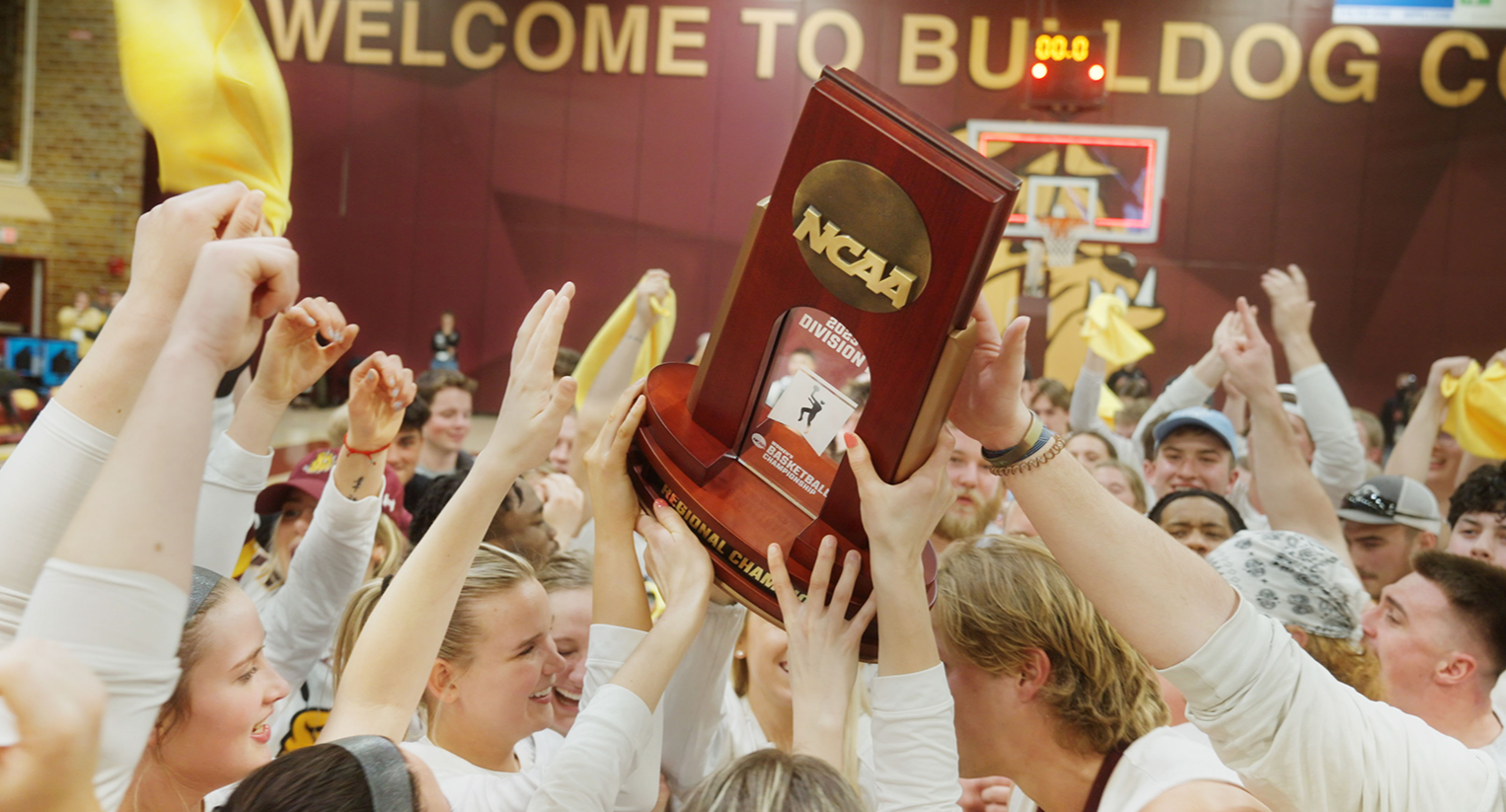
UMD athletics offers a balanced and competitive athletic program. The Bulldogs compete in seven men's and nine women's varsity sports as members of the Northern Sun Intercollegiate Conference, the National Collegiate Hockey Conference (men) and the Western Collegiate Hockey Association (women). Nationally, UMD belongs to the National Collegiate Athletic Association (NCAA) and competes at the Division II level except for Division I men's and women's hockey.

Every year UMD's College of Arts, Humanities, and Social Sciences offers a wide array of cultural events. The Tweed Museum of Art provides the region with diverse art exhibits and community programming. The Department of Art & Design brings a variety of artists on campus to speak for the Visual Culture Lecture Series, two of which jury the Annual Student Art Exhibition. UMD Music presents the community with a variety of vocal and instrumental concerts featuring students, guests, and resident artists. UMD Theatre produces an eclectic six-show dramatic season with everything from mainstream musicals to experimental theatre. These events occur on campus in the UMD Ordean Court arts triangle, comprised of the Tweed Museum of Art, Weber Music Hall, and the Marshall Performing Arts Center.
The Fine Arts Academy, a non-degree granting Community School of the Arts, offers high-quality music instruction to children and adults. The Viz and MMAD Labs are interdisciplinary research labs focusing on integrating information and emerging visual technologies, and 3D motion capture and high-definition video production facilities. Both labs host multiple open studio events yearly inviting the campus community to experience new technologies.
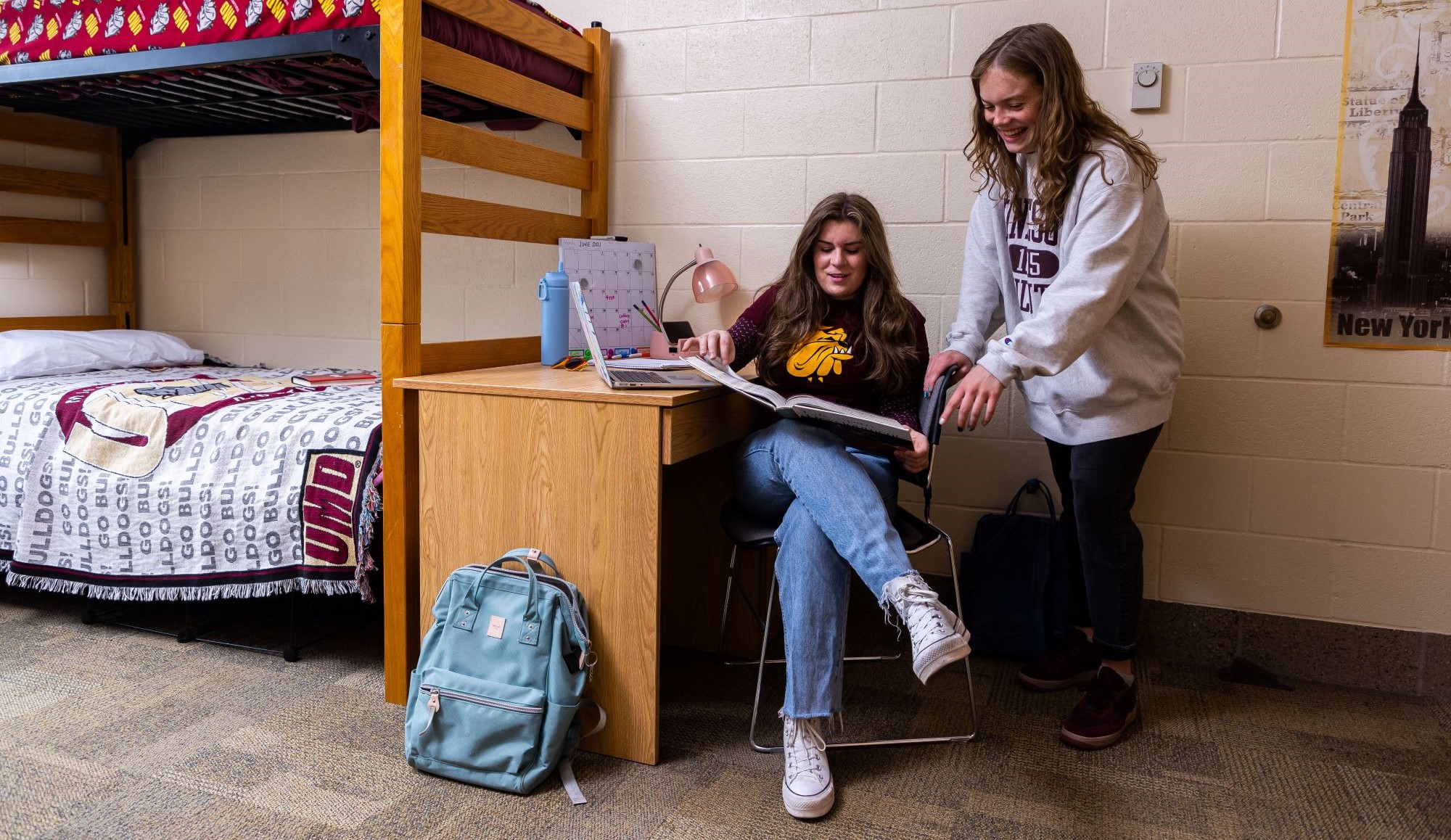
A variety of furnished housing is available at UMD for undergraduate students who wish to live in University residence halls and apartments. The University offers housing to 1,850 students in traditional residence halls and 1,100 students in apartment-style units. Most facilities have barrier-free access for students with disabilities. For more information, visit the UMD Housing and Residence website.
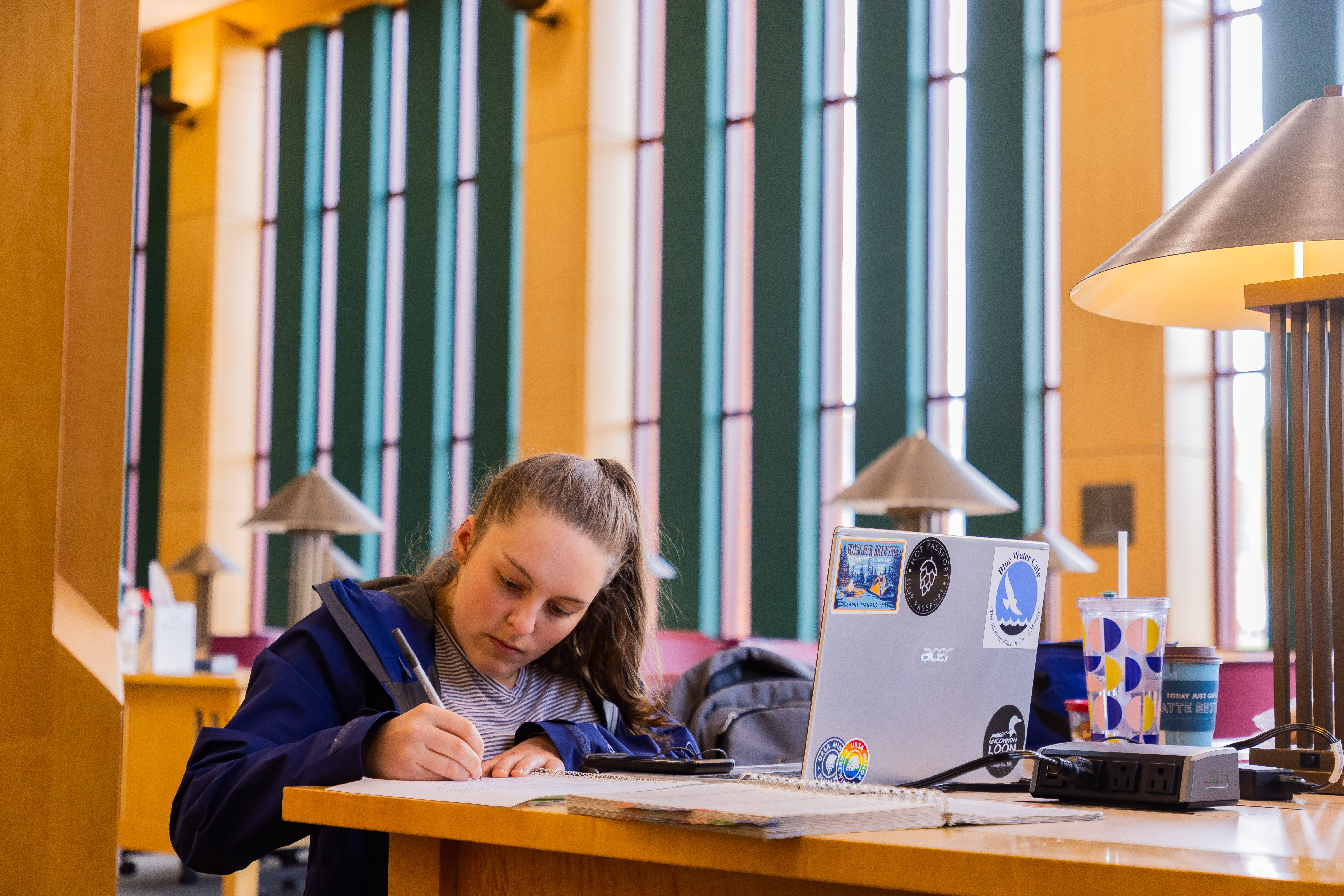
UMD's Kathryn A. Martin Library provides a full suite of library services, including research help, library instruction, online guides, course reserves, interlibrary loans, and both digital and physical materials that support student learning. On its second floor, the library is home to the Securian Learning Commons with collaborative academic support services such as the campus tutoring program, a writers' workshop and the math learning lab. Computers for guests and University-affiliated individuals are located throughout the facility, along with books, DVDs, academic journals, archives & special collections, and government documents.
Students have access to ebooks and articles from academic journals, news sources, and magazines via the library's 300+ online databases. Any circulating book from a University of Minnesota campus library can be requested and sent to UMD to be checked out using the library's Get It service. Materials not available in the University of Minnesota system can be requested using interlibrary loan. Librarians provide research help on the second floor and can be consulted through chat, drop-in hours, email, appointment, or by phone.
In addition to an array of services, students have access to study spaces to meet their needs: group study rooms as well as quiet and talking floors with a variety of seating options. Additionally, the library provides programming throughout the semester to connect students to the library and to each other.
For more information, visit the Kathryn A. Martin Library website.
Phone Numbers
| Academic Administration | (218) 726-7103 |
| Admissions Office (toll-free) | (800) 232-1339 |
| Alumni Association | (218) 726-8829 |
| Campus Security - UMD Police | (218) 726-7000 |
| Career & Internship Services | (218) 726-7985 |
| College of Education & Human Service Professions | (218) 726-7665 |
| College of Arts, Humanities, and Social Sciences | (218) 726-8981 |
| Development Office | (218) 726-7989 |
| General Information | (218) 726-8000 |
| Graduate School Office | (218) 726-7523 |
| Kathryn A. Martin Library | (218) 726-8102 |
| Labovitz School of Business & Economics | (218) 726-7281 |
| Natural Resources Research Institute | (218) 720-4294 |
| Swenson College of Science & Engineering | (218) 726-6397 |
| Tweed Museum of Art | (218) 726-8222 |
| University Marketing and Public Relations | (218) 726-6140 |
This page is updated every October.